



The Properties of SuDS Planters made from GRP
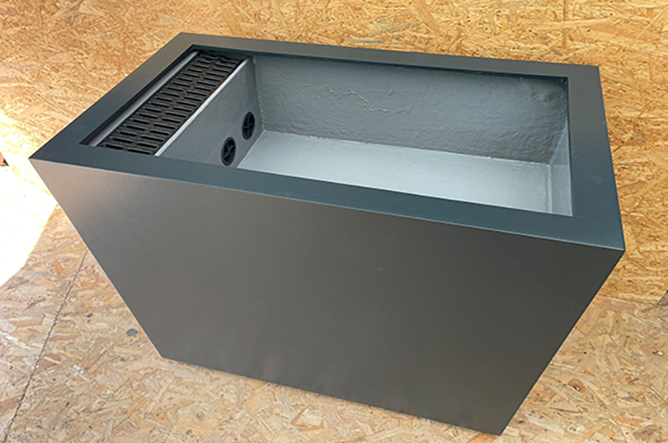
For a more contemporary setting many clients request alternative modern outer materials, such as powder coated metal and various polymers.
We have carefully considered the practical, installation, longevity, and other environmental impacts of alternative materials. GRP (Glass Reinforced Plastic) planters offer a compelling combination of durability, lightweight construction, and design flexibility, making them a popular choice for landscaping and interior design.
They are resistant to weathering, corrosion, and UV degradation, ensuring a long lifespan and requiring minimal maintenance compared to other materials like metal or concrete.
Larger volume attenuation storage volume for the same footprint.
(Please refer our Attenuation Storage Volume and Outflow Rates page)
Lightweight and Lower Carbon Footprint:
Being much lighter than concrete or ceramic, GRP planters require less fuel for transport, reducing carbon emissions. Additionally, installation is easier and requires minimal labour or machinery.
Strength-to-Weight Ratio:
GRP is incredibly strong yet significantly lighter than materials like concrete, making large planters easier to move and install, especially in rooftop gardens or areas with limited access.
Longevity and Durability:
GRP is resistant to corrosion, rust, and cracking, particularly in freezing conditions, and can last for decades with proper care, unlike many other materials.
Low Maintenance:
GRP planters do not require painting or staining and are not susceptible to pests like termites, leading to lower ongoing maintenance costs and effort.
Design Flexibility:
GRP can be moulded into a wide variety of shapes, sizes, and custom designs, and is available in a range of RAL colours and finishes, allowing for tailored aesthetics.
Weather Resistance:
They are designed to withstand harsh weather conditions, including frost and prolonged UV exposure, preventing fading and surface deterioration.
Repairability:
GRP is often easier and more cost-effective to repair if minor damage occurs compared to other materials.
Eco-friendliness:
GRP fabrication process is a low energy demanding process and can be made from recycled materials and is recyclable at the end of its life, making it a sustainable option.

Mailing List
Unsuccessful - please try again
Thank You
Thanks for subscribing to our mailing list.
Your name *